
Stamping elbows are processed by stamping, which has high production efficiency, easy operation, and is easy to achieve mechanization and automation. This is because stamping relies on stamping dies and stamping equipment to complete the processing. The stroke times of ordinary press machines can reach dozens of times per minute, and high-speed pressure can reach hundreds or even thousands of times per minute, and each stamping stroke may result in a stamped part.
Stamping elbow is made of the same material as the pipe, which is punched into half circular elbows using a stamping die, and then the two half circular elbows are assembled and welded to form. Welded elbows, also known as "shrimp bends", can be cut and welded onto pipes or steel plates, and their specifications can be very large. Stamping bends have better smoothness, while welding bends are not very round and smooth. The bending radius of both is not very large, usually about 1 time the diameter of the pipeline. The bending half capacity diameter of the bending bend is about 8 times the diameter of the pipeline, and its smoothness is also the same as stamping bends.
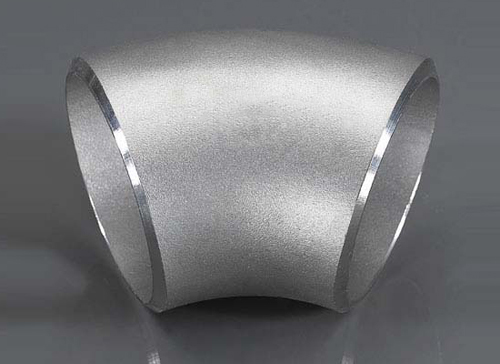
A commonly used connecting pipe fitting in the installation of stamped elbows, which connects two pipes with the same or different nominal diameters to make the pipeline rotate at a certain angle. Whether to use welded elbows for stamping elbows mainly depends on the nature and grade of the conveying medium. According to national regulations, welded elbows are not allowed to be used for oil and gas pipelines, and welded elbows are not allowed to be used for pipeline direction changes and bends that serve as thermal compensation.
The difference between stamped elbows and welded elbows is as introduced above. When operating and using this type of elbow, we all need the correct method to operate and use it.
 CHINESE

